Three Asian Games witness great changes in China
2023/02/20 15:29
From the Asian Games Beijing 1990 and the Asian Games Guangzhou 2010 to the upcoming Hangzhou Asian Games to be held in September, the 33-year time span has exhibited image of China in different times and left us precious memories of these Asian Games.
Asian Games Beijing 1990: An attempt to embrace the world through sports for China
The Asian Games Beijing 1990 was the first comprehensive international sport event of China. At that time, through the event, Chinese people who did not have much experience in international exchanges knew about the world, while also leaving an impression for the rest of the world to know about China.

The people's enthusiasm was fueled by the Asian Games not only in Beijing but also other regions in China. Asian Mighty Winds, the song of Beijing Asian Games, was sung in the streets. The event emblem and mascot ("Panda Panpan") could be seen everywhere. Of course, Hangzhou was no exception. In 1990, Hangzhou people flocked to streets to cheer for the big event with high passion.
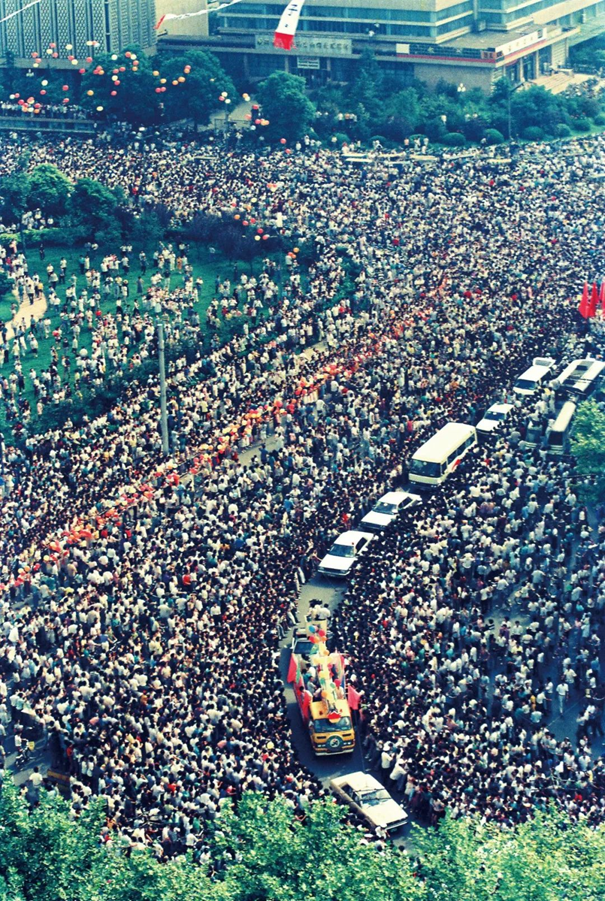
During the Asian Games in 1990, the crowds were surging in Hangzhou Wulin Square. [Photo/Lu Baoquan]
Xu Haifeng was the shooter of China to win the first gold medal of the Olympic Games. When he ignited the flame of the Asian Games, Chinese people had the courage to embrace the world, as well as strong sportsmanship and patriotism.
Asian Games Guangzhou 2010: A successful event to exhibit Chinese overall national strength

As China officially joined the World Trade Organization in 2001, China's economy picked up pace with global economy. China successively held four high-level international events, such as Olympic Games Beijing 2008, World Expo Shanghai 2010, Asian Games Guangzhou 2010, and Universiade Shenzhen 2011. China was more leisurely to host the Asian Games Guangzhou 2010.
As a leading city of China's reform and opening-up, Guangzhou profoundly showed the achievements of reform and opening-up for more than 30 years. At Beijing Asian Games, it took 15 minutes to announce the results after the completion of each game. In Guangzhou, it only took less than 10 seconds. The 90-fold increase in speed was the qualitative leap between two eras.
Hangzhou Asian Games: A stage to see a fabulous China in a new era
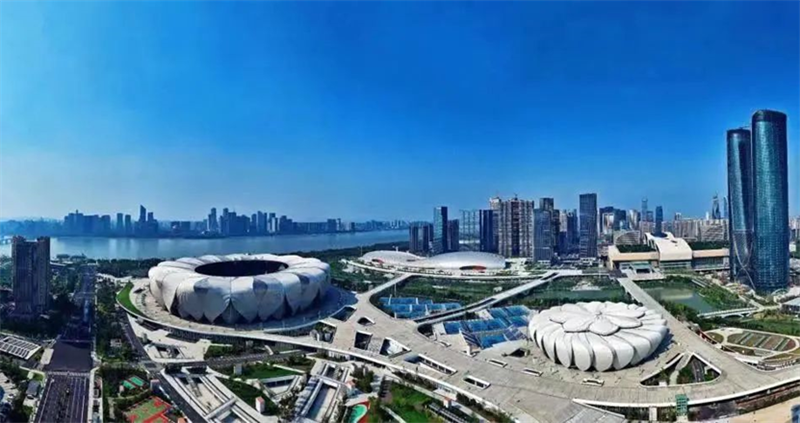
Thirty-three years later, Hangzhou becomes the third city of China to host the Asian Games, following Beijing and Guangzhou.
For China, such sporting gala is no longer a way to display it overall national strength. Instead, it is transformed into an option for lifestyle, a gathering festival and a tourist project. The people are more willing to participate in sports and enjoy the happiness brought by sports.
Hangzhou Asian Games will also become the first intercontinental event after the adjustment of the pandemic prevention & control policy in China. Hangzhou will stage the grand sports event characterized by "Chinese Style, Zhejiang Glamour and Hangzhou Flavour" with more inclusiveness.
From Beijing and Guangzhou to Hangzhou, behind the change of the host city lies the progress of China's economy and society in the past 33 years, the change of Chinese perspectives toward sports and the change of China brought by sports. These three sporting events also witness the process of China's better integration with the international sports circle.